
What 'Luxury' Actually Means on a Small Ship in Croatia
The word gets overused. Every third charter brochure calls itself luxury, and half of them mean clean linens and a welcome cocktail. On a genuine luxury small ship in Croatia, the difference is felt on day two, not day one, when you realize the chef just asked what you don't eat rather than handing you a fixed menu, when the crew-to-guest ratio means someone noticed your coffee preference without being told twice, when the ship anchors somewhere a larger vessel simply cannot reach.
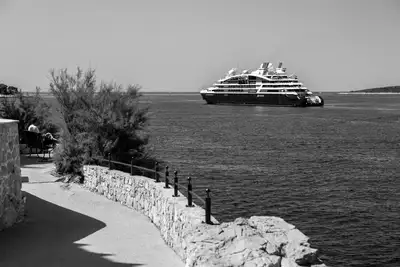
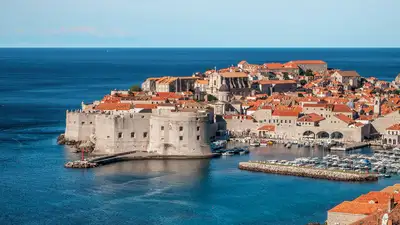
Croatia's Dalmatian coast happens to be one of the world's most compelling arguments for this style of travel. The archipelago runs roughly 380 kilometers from Zadar south to Dubrovnik, with more than a thousand islands, most of them accessible only by small vessels. Luxury here is less about square footage and more about the fact that you're waking up in a bay on Vis with nobody else in it.
This guide covers the operators and vessels that genuinely deliver, on itinerary, on service, on food, and on access to the places that matter.
The Vessels Worth Knowing
Katarina Line's Prestige Fleet
Katarina Line operates one of the most established fleets on the Croatian coast, and their Prestige-category ships represent a meaningful step up from their standard cabins. The MS Adriatic Sun, at 47 meters, carries a maximum of 36 guests and maintains a crew-to-guest ratio that stays under 1:3 across its season. Cabins are en suite with air conditioning that actually works, a detail that matters in August when the stone walls of Hvar Town are still radiating heat at 11 PM.
The itineraries run Saturday to Saturday out of Split, touching Hvar, Korčula, Mljet, and Dubrovnik on the standard southern route. The northern route goes the other direction toward Šibenik and the Kornati islands. Neither route is exotic on paper. What changes at the Prestige level is where the ship anchors overnight: Stari Grad bay rather than Hvar Town harbor, the inner anchorage at Polače on Mljet rather than the ferry dock.
Luka Luxury Cruises
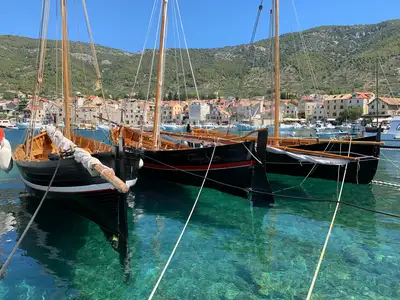
Smaller operation, higher per-cabin price, more interesting food. Luka runs two vessels, both converted traditional brodovi rebuilt to a standard that would pass for new construction in most markets. Maximum 18 guests. The chef on the primary vessel trained in Zagreb before spending three seasons at a konoba in Vis Town, which shows in the menu: peka done properly (meaning the dish goes under the peka lid for two hours, not forty minutes), fresh fish bought directly from fishermen in Komiža, and a version of skradinski rižot that takes the better part of a day to prepare.
The crew-to-guest ratio on Luka's ships runs closer to 1:2. That matters less for the service theater of it and more because it means someone is always available when you want to take the tender into a cove at an unscheduled hour.
Quark Expeditions' Adriatic Charter (Seasonal)
Quark operates mainly in polar regions, but their seasonal Adriatic charters, typically running June through August, bring a different standard of expedition thinking to the Croatian coast. The vessel used for these charters is roughly 72 meters and carries 50 guests, which is at the upper edge of what counts as small-ship here. The argument for them is the naturalist program: a marine biologist runs briefings on the Kornati ecosystem, and the kayaking excursions into sea caves near Dugi Otok are led by guides who know what they're doing rather than guides who were recently promoted from bar staff.
Price point: from approximately €8,500 per person for a seven-night charter cabin, as of the 2024 season.
Infinity Yachts Croatia
This is where the plunge pools enter the picture. Infinity operates a small fleet of converted motor yachts, the largest of which, the MY Adriatic Pearl, has four guest suites, each with private outdoor space, and two of those suites have individual plunge pools on private decks. Maximum guest count: 8. This is not a ship in any conventional sense; it's a private yacht available for full-charter at around €35,000 per week in high season, or occasionally sold cabin by cabin through specialist agents at €7,500–€9,000 per cabin for a seven-night run.
The food and beverage program is genuinely impressive. The chef sources produce from the Pelješac market in Ston on Monday mornings when the ship passes through, and the wine list runs heavily toward Plavac Mali from Dingač, the steep south-facing vineyards above Trstenik that produce arguably the best red wine in Dalmatia. No Michelin stars are involved, because Michelin doesn't operate in Croatia yet, but the cooking would be competitive with a mid-range Michelin-starred kitchen in any city you'd care to name.
Secret Adriatic Expeditions
Small company, relatively new (founded 2019), and already with a strong reputation among the kind of travelers who compare notes carefully. Their ship, the MV Maris, carries 24 guests at maximum and has a wellness program that isn't a euphemism for a massage table bolted to the sun deck. There's a trained physiotherapist on board for every departure. Morning yoga happens on the bow deck when the ship is at anchor, and the itinerary is built specifically to allow slow mornings, meaning the ship doesn't move before 9 AM unless guests want it to.
Maris focuses on islands that other operators skip. Lastovo, 50 nautical miles west of Dubrovnik, appears on most itineraries once. It appears on MV Maris itineraries twice, and the second stop is overnight. Lastovo Town sits in the interior of the island, you drive up from the harbor, and the town faces away from the sea, which is unusual enough that it's worth an explanation from the guide: the islanders historically wanted to be invisible to pirates, so they built facing inland. That kind of context is the difference between a guided stop and a tourist stop.
What the Itineraries Actually Deliver
A standard seven-night luxury small-ship itinerary out of Split covers somewhere between 400 and 600 nautical miles depending on routing. The southern route, Split, Hvar, Korčula, Mljet, Dubrovnik, is the canonical one, and it's canonical for good reason. The islands have distinct characters and the stops build on each other.
Hvar deserves a specific note here. Hvar Town in July is a particular kind of chaos: yachts three-deep on the main quay, cocktail prices that would be unremarkable in Monaco, crowds on the Fortica fortress steps. A luxury small-ship itinerary that gives you Hvar Town and only Hvar Town has missed the point of Hvar. The better operators overnight in Stari Grad bay, the bay is one of the most intact ancient Greek harbors in the Mediterranean, the town at its head is quiet in a way Hvar Town isn't, and the walk up through the olive groves above the harbor takes about 25 minutes and ends with a view that justifies the entire trip.
Korčula is often presented as a wine-and-walls destination, and the walls are worth seeing. But the serious stop on Korčula is Lumbarda, at the island's eastern tip, where the Grk grape grows in sandy soil that exists almost nowhere else. A tasting at Bire Winery in Lumbarda, approximately 8 kilometers from Korčula Town, gives you a white wine that doesn't taste like anything grown anywhere else. Dry, mineral, faintly smoky. The bottles are difficult to find outside Croatia, which makes the tasting feel like something you actually found rather than something you were herded toward.
Mljet is the quietest of the major stops and the most dependent on timing. The national park covers the western third of the island and contains two saltwater lakes connected by a narrow channel; the small Benedictine monastery island in the larger lake has been there since the twelfth century. The luxury operators who know what they're doing arrive at Polače, the village at the park entrance, either early morning or late afternoon, when the day-trippers from Dubrovnik have gone. The difference between Mljet at 8 AM and Mljet at noon is the difference between a nature reserve and a queue.
Vis is the outlier. Farthest from the mainland, least developed, most itself. Vis Town on the eastern side of the island has a waterfront of Habsburg-era buildings and a handful of restaurants that would be famous if they were in Zagreb. Pojoda, on Vis Town's waterfront, does a fish menu that changes based on what came in that morning, the kind of menu that sounds like a cliché until you're sitting there at 8 PM with the lights on the water and a plate of grilled dentex that was in the Adriatic six hours ago.
Crew-to-Guest Ratios: Why the Number Matters
Luxury marketing loves the 1:3 crew-to-guest ratio as a headline figure, and it is meaningful, but not for the reason most people think. The point isn't that someone refolds your towel while you're at lunch. The point is operational capacity: a ship with a ratio under 1:3 can offer flexible departure times for tenders, unscheduled stops when the captain finds a bay worth anchoring in, and meals that adapt to what's available at the market that morning rather than what was ordered in Split two weeks ago.
The operators above all maintain ratios at or better than 1:3. Infinity Yachts Croatia runs closer to 1:1 on the MY Adriatic Pearl given the eight-guest maximum. Secret Adriatic Expeditions runs approximately 1:2.5 on MV Maris. These ratios are verifiable, ask the operator for crew count and maximum guest capacity before booking.
When to Go
June and September are the honest answers. June gives you water warm enough to swim from day one, itinerary stops that aren't yet overcrowded, and crew that is fresh rather than eight weeks into a demanding season. September gives you slightly cooler air, clearer water, lower prices (sometimes 15–20% below August rates on the same vessels), and harvests: grapes on Pelješac, figs everywhere, the last of the lavender oil being bottled in the Hvar interior.
August works if you book a vessel with access to the outer islands, Vis, Lastovo, Biševo. The further you get from Split, the less the August crowds follow you.
April and October are for a specific kind of traveler who doesn't mind some uncertainty. The bura can blow in April, some restaurants in smaller towns don't open until May, and the water is cold enough to discourage swimming. But the islands are genuinely empty, the prices drop significantly, and the light in October on the Dalmatian stone is unlike any other month.
Booking Practicalities
Most luxury small-ship operators in Croatia work through specialist travel agents rather than direct booking platforms. The agents who know this market, companies like Black Tomato, Scott Dunn, or the Croatia-specialist Adriatic Holidays, can place you on the right vessel for the right week and negotiate cabin placement in a way that direct booking doesn't allow.
Deposits typically run 30% at time of booking, with full payment due 60–90 days before departure. Cancellation terms on luxury vessels are strict: most operators retain 50% inside 60 days and 100% inside 30 days. Travel insurance with a cancel-for-any-reason rider is not optional at these price points.
Tipping culture on Croatian small ships is less formalized than on Caribbean yachts. A reasonable guide is €10–€15 per guest per day for the crew collectively, distributed through the captain at the end of the voyage. Some operators include a service charge; confirm before you arrive.
A Final Word on Expectations
Guests who arrive expecting the polished choreography of a luxury Caribbean charter sometimes find the first day on a Croatian small ship slightly rough around the edges. The service is warm but not theatrical. The captain may join dinner and have opinions about local politics. The crew on a family-run vessel treats guests like people they're genuinely glad to have aboard, which is different from the trained deference of a large cruise operation, and better, once you've adjusted.
For more on this, see cooking and wine vacations.
By day three, most guests stop noticing what the ship lacks and start noticing what it has: a gangway that puts you in Vis Town at 7 AM when the bakery on Ul. Stjepana Radića is just opening, a tender that can take you to a beach on Biševo's southern coast that has no name on any map, a dinner table where the fish on the plate was chosen at the market two hours earlier. That's the actual luxury. The plunge pools are nice. The access is the point.
Comments (0)
No comments yet. Be the first!