
Why 'Unique' Actually Means Something Here
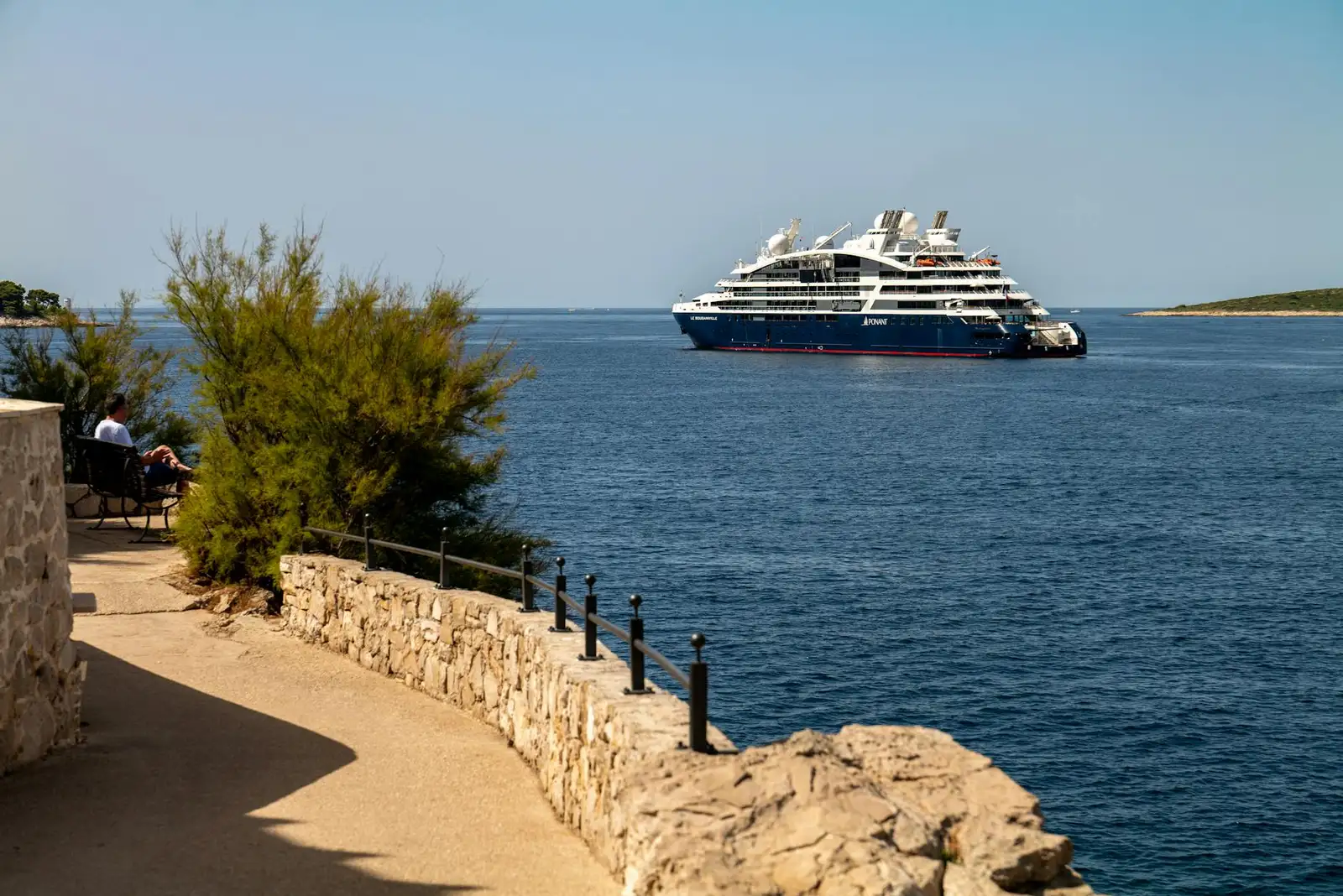
The word gets thrown around so freely in travel marketing that it's nearly useless. But when it comes to small ship Croatia itineraries, the claim has geography behind it. Croatia's coastline runs for over 1,700 kilometers if you trace the islands, and the standard seven-night route, Split to Dubrovnik, or the reverse, covers maybe a fifth of what's actually out there. The rest sits waiting: the Kornati archipelago's lunar limestone, the reed-fringed channels of the Neretva delta, the far Dalmatian islands where the ferry calls twice a week and the restaurant has eight tables.
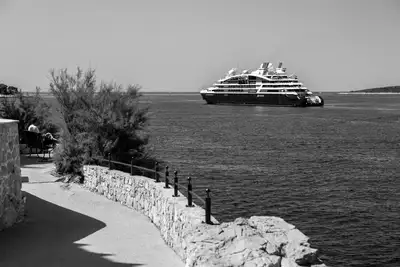
Small ships, vessels carrying between eight and forty-eight passengers, roughly speaking, are the only practical way into most of it. Not because larger ships are uncomfortable, but because they physically cannot go there. A 200-passenger catamaran cannot anchor in the inner lagoon at Telašćica Nature Park on Dugi Otok. A small ship can, and does.
What follows is not a list of every operator. It's a guide to the kinds of itineraries and themes that set a small-ship Croatia itinerary apart from a standard coastal tour.
The Kornati Circuit: Croatia's Most Underused Archipelago
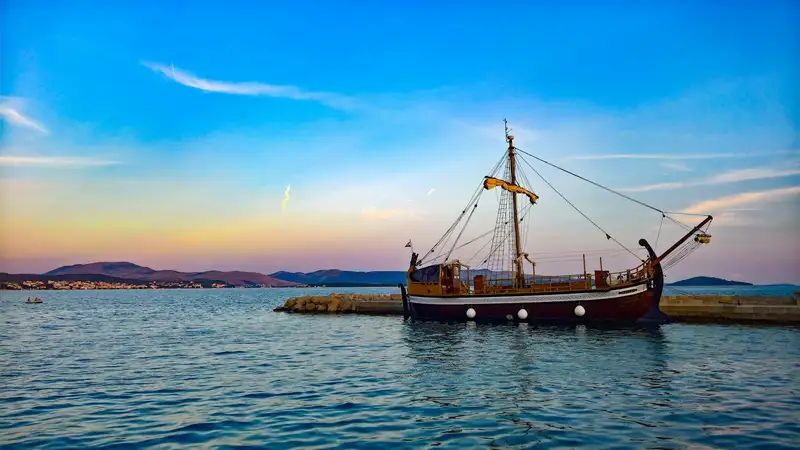
Most travelers who visit Croatia never see the Kornati. They've heard of them, perhaps, but the islands sit offshore from Šibenik and Zadar in a way that doesn't lend itself to a day trip, and the standard Split-to-Dubrovnik route bypasses them entirely.
There are 89 islands and reefs in the Kornati National Park. Almost none are inhabited permanently. The limestone has been stripped bare by centuries of grazing and fire, and what remains is a landscape that reads as almost extraterrestrial, white rock dropping into water that shifts from jade to ink-blue depending on depth and cloud cover. The silence, on a calm morning at anchor, is the kind you notice.
Small-ship itineraries that make the Kornati a centerpiece, rather than a half-day detour, usually depart from Zadar or Šibenik and spend two or three nights anchored within the park. The park entry fee (around 150 HRK per person per day as of recent seasons, though check current rates) covers the protected area, and the number of vessels allowed to anchor overnight is capped, which is the point. You're not sharing the anchorage with fifty other boats.
Look for itineraries that include Telašćica on Dugi Otok, which sits just north of the national park boundary. The salt lake there, Jezero, is warm, shallow, and reportedly good for the skin, though I'd treat that claim with some skepticism. The walk above the cliffs on the southern edge of the lake, looking down 160 meters to the open sea, is not in question.
Culinary-Focused Itineraries: What They Actually Involve
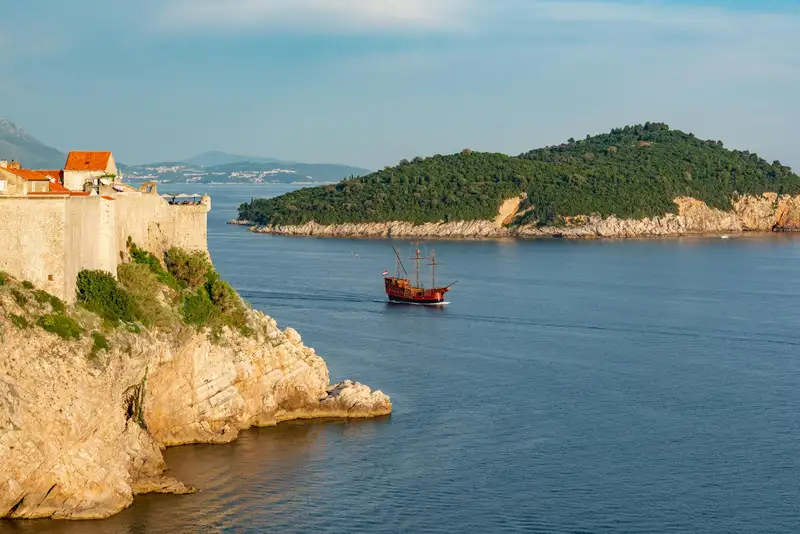
Several operators now market 'culinary cruises' along the Croatian coast. The quality varies enormously, and it helps to understand what separates a culinary itinerary from one that simply includes a cooking class and calls itself gastronomic.
The best versions are built around producers and places. A stop at the oyster beds in Mali Ston, where Ostrea edulis has been farmed since the Romans, is not optional on a serious culinary itinerary, it's the point. The town is small, the harbour is quiet, and eating oysters pulled from the water two hours earlier while sitting at a plastic table outside a family konoba is one of those moments that makes the whole trip cohere.
Similarly, a Hvar itinerary with culinary intent should include time in the interior, around Velo Grablje and the lavender farms. The distillery run by the Bučić family has been operating for generations, and the lavender honey sold locally is nothing like the tourist-shop version in Split. Getting there requires either a vehicle or a good walk from Stari Grad, which is the kind of friction that a well-designed small-ship itinerary absorbs for you.
For wine, the Pelješac peninsula is the serious stop. Dingač and Postup are the two protected designations for Plavac Mali grown on the steep south-facing slopes above the sea. The Miloš winery in Ponikve and Grgić Vina in Trstenik both receive visitors, but the latter requires advance arrangement. A small-ship operator who has those relationships already built is offering something useful.
Peka deserves a mention. It's the traditional Dalmatian cooking method, meat or seafood slow-cooked under an iron bell covered in embers, and it takes three to four hours minimum. Most restaurants require it to be ordered in advance, which means a ship that plans ahead can offer peka dinners that a spontaneous traveler cannot easily access. Ask whether the itinerary includes a peka meal arranged ashore.
Wellness at Sea: The Quieter Version
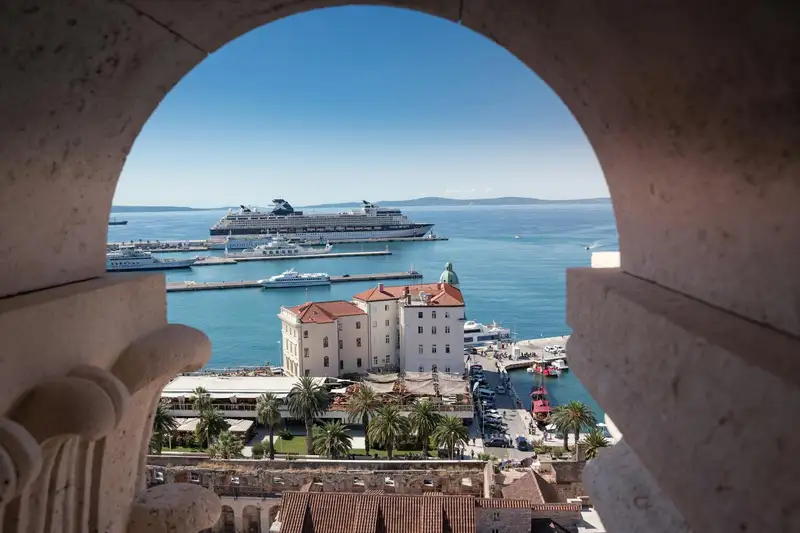
Wellness cruises along the Croatian coast have grown quickly as a category, and the range runs from serious to decorative. On the serious end, you have itineraries built around specific practices: morning yoga on the foredeck at anchor, guided meditation sessions timed to the early light over Vis or Lastovo, structured digital detox periods, and nutritionist-designed menus that reflect what's being caught and grown locally rather than what a spa brochure would suggest.
The boat design matters here more than in other categories. A wellness charter on a vessel with eight cabins and an open stern platform is a different proposition from one crammed onto a 48-passenger gulet where the deck space is shared with sunbathers and card players. Ask about the ratio of deck space to passenger capacity before booking.
Lastovo is the island that comes up most often in wellness-oriented itineraries, and for good reason. It's one of the most remote inhabited islands in Croatia, a UNESCO-designated Dark Sky destination, and the kind of place where the absence of stimulation is itself the draw. The town of Lastovo sits oddly, facing inland, away from the sea, which was a deliberate medieval choice to avoid pirate visibility. There are a handful of restaurants, no nightlife to speak of, and the walking trails through the protected nature park are well-marked and largely empty.
If an operator is promising wellness and routing through Hvar Town in July, that's a contradiction worth flagging.
Eco-Expeditions: The Route Less Charted
A small subset of Croatia's small-ship operators have moved toward expedition-style programming, led by marine biologists, ornithologists, or cultural historians instead of standard tour guides. These aren't cruises with an educational slide show. They're itineraries where the expert shapes the route, not the other way around.
The Neretva delta, southeast of Makarska near the town of Ploče, is almost never included in standard itineraries. It's a working river delta, reeds, eels, frogs, migratory birds, and the boat access is via narrow channels that a large vessel cannot enter. Small flat-bottomed tenders or local fishing boats are used to get into the interior. An ornithologist-led morning in the delta during spring migration is unrepeatable. The species count alone, herons, egrets, night herons, occasional glossy ibis, justifies the deviation from the standard route.
The Blue Cave on Biševo gets mentioned in every Croatia guide, and deservedly so, the light inside at midday in summer is extraordinary. But the standard visit involves queuing with hundreds of other visitors in motorboats. A small-ship itinerary that departs Komiža on Vis at 6:30 AM, before the day-trip crowd arrives from Split, operates in a different register. The cave itself is the same. The approach is not.
For marine biology programming, the waters around the Kornati and around Mljet National Park are the most productive. Posidonia oceanica seagrass meadows cover large sections of the seabed, and they're an indicator species for water quality. Several operators now partner with the Institut za oceanografiju i ribarstvo in Split on citizen science programs where passengers participate in water sampling and seagrass monitoring. It sounds dry on paper. On the water, it tends to land differently.
The Islands That Don't Make the Brochure
Vis gets its due recognition now, partly because of the film Mamma Mia 2, which did for Vis what films always do for places, created a wave of visitors who mostly concentrate in Komiža and Vis Town and miss the interior entirely. The wine cooperative near Podšpilje produces Vugava, a white grape variety found almost exclusively on this island. The cooperative is not glamorous. It's a working facility. The wine is interesting.
Šolta sits just west of Split, close enough that you can see the city lights from the higher ground, but it receives a fraction of the visitors that Brač or Hvar attract. The village of Stomorska on the eastern tip has a harbor small enough that only vessels under about 30 meters can enter comfortably. The olive oil from Šolta, from around Grohote, has a regional reputation that doesn't travel far beyond Croatian foodie circles, which means you can buy excellent oil from producers without the markup.
Pašman, across the narrow Pašman Channel from Biograd na Moru, is another island that small-ship itineraries occasionally include and standard tours never do. The Benedictine monastery at Tkon has been continuously occupied since the 12th century. The monks are still there. The church interior is plain and old and worth a quiet twenty minutes.
Mljet, to be clear, is not obscure, it has a national park and a well-established reputation. But the western end, around Polače and the salt lakes of Malo Jezero and Veliko Jezero, is the part that small ships access easily and large cruise ships cannot. The lake swim, followed by lunch at Melita restaurant on the island within the lake, is one of those afternoons that justifies the entire trip.
Choosing the Right Vessel: What to Actually Ask
The vessel type matters more than most travelers realize when booking a small ship Croatia itinerary. The broad categories are: traditional wooden gulets (Turkish-origin, now built widely in Croatia), modern steel or aluminum expedition-style vessels, and converted or purpose-built boutique ships.
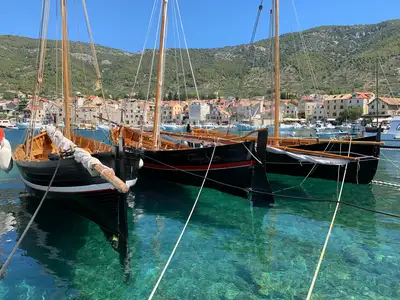
Gulets are beautiful and slow. They suit itineraries where the sailing is secondary to the anchoring. They're typically not stabilized, which means open-sea crossings in a gulet can be uncomfortable if the bura is blowing. The cabins on older gulets can be small and warm. The deck space, on the other hand, is usually generous, and the social dynamic on a gulet lends itself to the slightly-extended-family atmosphere that the best small-ship operations produce.
Expedition-style vessels are more capable in rough weather, often have zodiacs or tenders for shore access, and tend to attract passengers who want to cover more ground. They're the right choice for Kornati circuits or Neretva delta programs where the tender is actually used.
Three questions worth asking any operator before booking:
- How many passengers maximum, and what's the typical load?
- What's the tender situation for shore excursions?
- Who leads the specialist programming, and what are their actual credentials?
The third question separates operators who have invested in expertise from those who've added 'expert-led' to existing itineraries.
Timing: The Honest Version
June and September are the months that experienced small-ship travelers choose, and there are concrete reasons. July and August see the Adriatic at its most crowded, anchorages that hold twelve boats comfortably in June hold thirty in August, the restaurants in Hvar Town have hour-long waits by 8 PM, and the water temperature, while lovely, doesn't compensate for the density.
June offers warm but not hot days, water temperatures around 22-24°C, and harbors that are busy but not overwhelmed. The lavender on Hvar typically peaks in late June, which aligns well with culinary or nature-focused itineraries.
September is arguably the better month. The crowds have thinned, the water is at its warmest (having absorbed three months of summer heat), the light in the late afternoon has something different in it, lower, more amber, and the fig and grape harvests are underway on the islands. A September small-ship itinerary that includes a vineyard visit during harvest is timed to something real, not to a calendar approximation.
May is possible and has its advocates. The Adriatic is cool, water temperatures around 18°C, and some island facilities aren't fully open before the last week of the month. But the crowds are minimal and the wildflowers on the karstic hillsides above Stari Grad or above Lumbarda on Korčula are worth the trade-off.
A Final Word on What 'Authentic' Actually Requires
The word 'authentic' has been laundered into near-meaninglessness by travel marketing, but the concept it points toward is sound. An authentic small-ship Croatia itinerary is one where the plan serves the place rather than the other way around. Where the morning changes because the skipper knows the wind is right for a crossing to an island that wasn't on the schedule. Where the lunch stop is at a konoba in Prvić Luka that has eight tables and no English menu, not at a restaurant in Šibenik that has optimized for tour groups.
That kind of flexibility is built into the best small-ship operations, and it's not available at scale. It requires a small boat, a crew with local knowledge, and passengers who've accepted that the itinerary is a proposal rather than a contract.
For more on this, see Culture Discovery Vacations.
That trade-off, control for spontaneity, predictability for access, is the actual product. Everything else is decoration.
Comments (0)
No comments yet. Be the first!