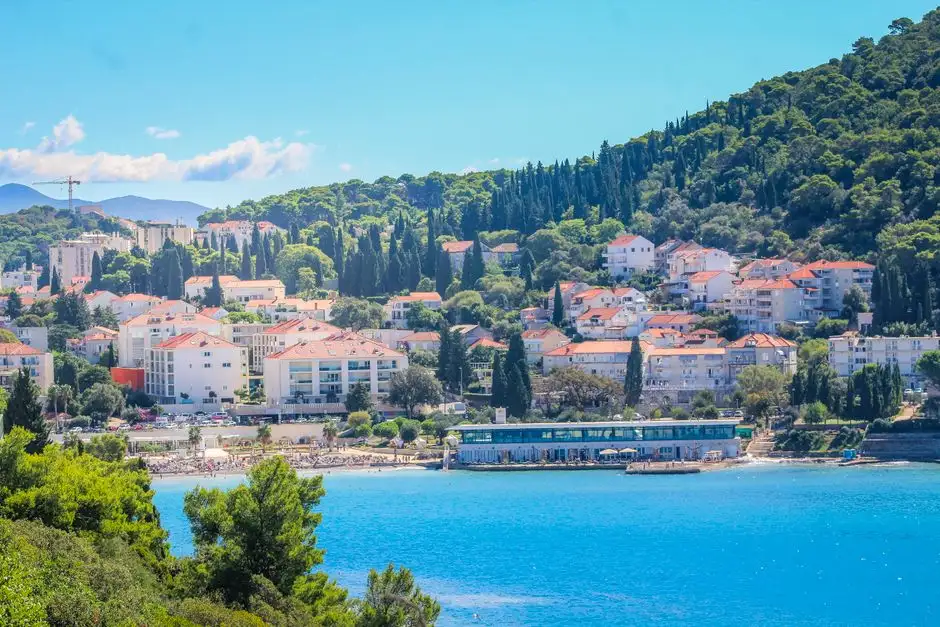

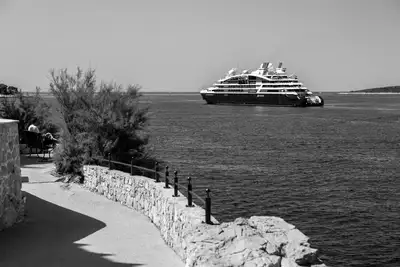
The anchor drops in a bay so quiet you can hear the rope uncoiling. No PA system. No queue for the gangway. Water the color of old glass and a pine-covered hillside, and whatever you want to do next. That's the thing about a small ship in southern Dalmatia; it doesn't deliver you to a place so much as it sets you down inside one.
This route runs from Dubrovnik through the Elaphiti Islands, across to Mljet, down to Korčula, and back up through the islands toward Hvar. It's one I'd recommend to almost anyone considering their first small-ship cruise in Croatia. It covers a lot of ground without ever feeling rushed, and it mixes the kind of history that actually sticks (walled towns, Roman salt pans, a Benedictine monastery on a lake) with long afternoons that have no particular agenda.
Seven days. Here's how it tends to go.
What Kind of Ship Are You On?
Before the itinerary, a word on the vessel: because it shapes everything.
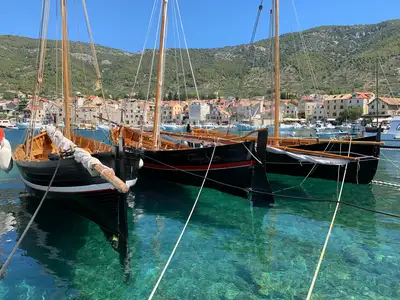
On a gulet (the traditional wooden motor-sailer common throughout Dalmatia), you're typically with somewhere between 8 and 36 people, sleeping in cabins below deck, eating meals together at a long table on the stern. The crew cooks. You don't decide where to anchor; the captain does. It's relaxed in a way that takes some people a full day to settle into.
Mini-cruises on small purpose-built ships carry slightly more passengers, sometimes up to 50, with a bit more structure, an onboard guide here and there, and a fixed itinerary that rarely changes. Both formats work well for this southern Dalmatia route. The gulet feels more personal; the mini-cruise often has better cabin ventilation and more dependable hot water. That last point matters more than people expect when they're booking.
If you're weighing group size and what it does to the overall experience, this framework for DIY vs guided tours is helpful before you commit to anything.
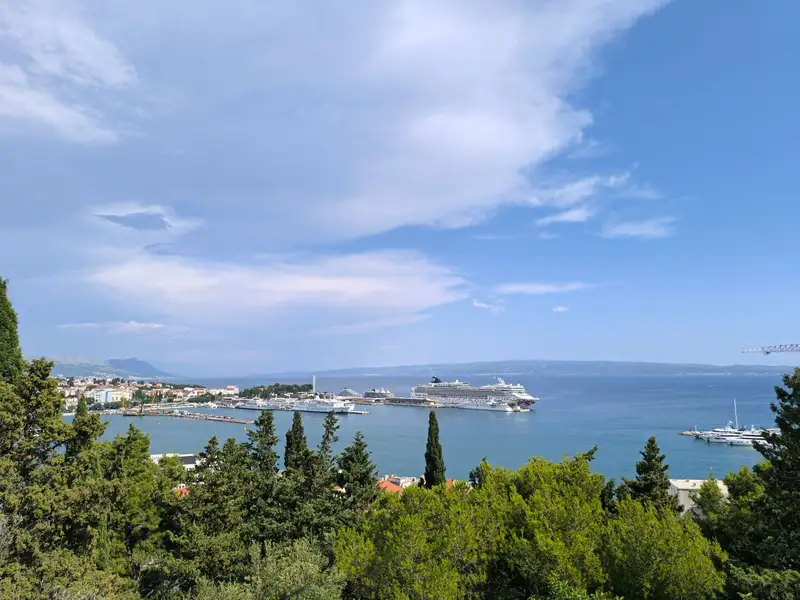
Day 1: Dubrovnik: Boarding and First Night
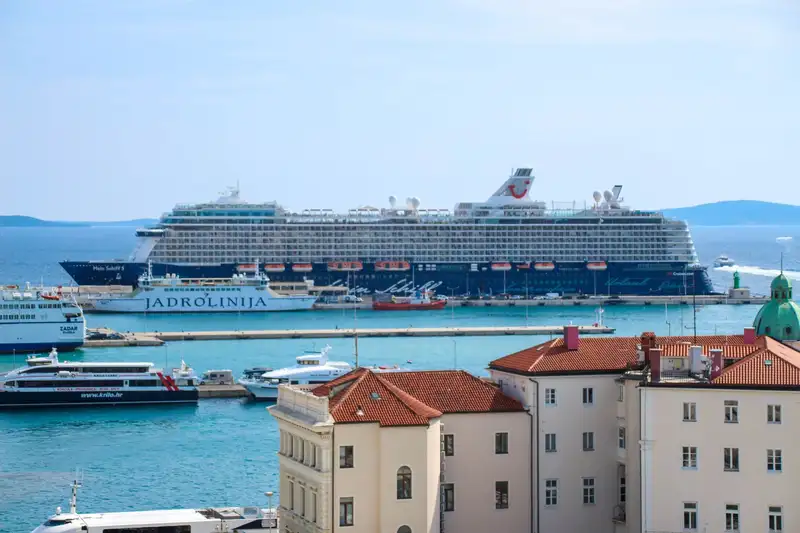
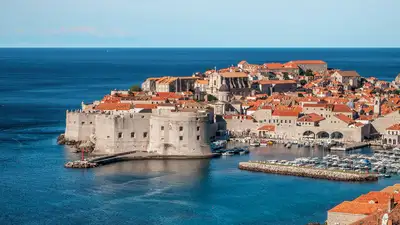
Most ships board in the late afternoon. Dubrovnik's main port is at Gruž, a 20-minute walk or quick bus ride from the Old City walls. Don't confuse it with the cruise ship terminal at the far end of the harbor: that's for the big ships and has nothing to do with you now.
Board, find your cabin, and resist the urge to rush straight back into the Old City. You'll have time. The first evening is usually spent at the dock or anchored just off the coast: drinks on deck, introductions, and the first dinner from the cook. On better gulets, that opening meal sets the tone right away: fresh fish, local olive oil, probably some pršut and a bottle of Plavac Mali from the Pelješac peninsula.
If you haven't yet walked Dubrovnik's city walls, go the morning before you board. They date back to the 13th century and wrap around one of the most intact medieval town centers in Europe. The official Dubrovnik Old City walls site has current entry times and pricing; it changes by season and gets crowded by late morning in summer.
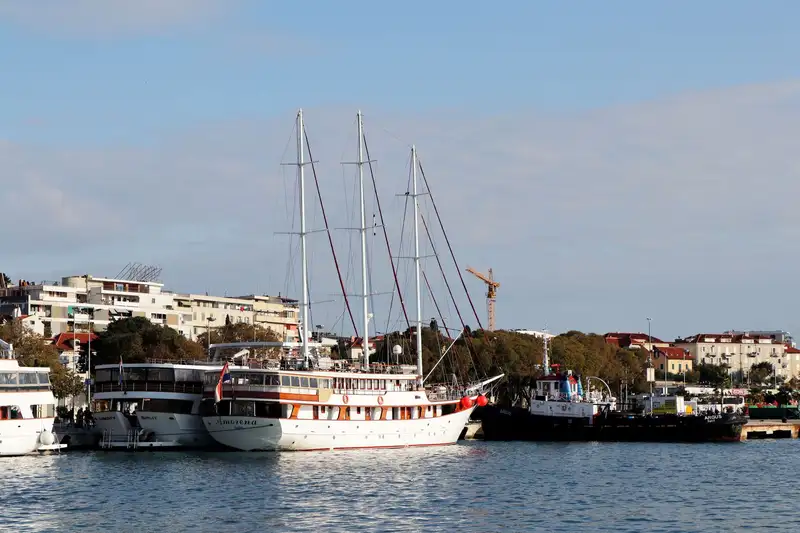
Day 2: The Elaphiti Islands, Šipan and Lopud
The Elaphiti archipelago sits just northwest of Dubrovnik, close enough that you can watch the city's limestone hills fade behind you as you motor out. Three islands are inhabited: Koločep, Lopud, and Šipan. Most itineraries touch at least two.
Šipan is the largest and the quietest. Its main settlement, Šipanska Luka, is a long harbor lined with old stone houses, most of them built by noble Dubrovnik families as summer villas in the 15th and 16th centuries. Some are crumbling in the best possible way. There are almost no cars on the island, a detail that sounds appealing until you realize it's simply how things work there.
Lopud has a sandy beach, Šunj, on its far side, a 20-minute walk across the island. It's one of the few sandy beaches along this stretch of coast, which is otherwise mostly pebble and rock. In July and August it fills up fast. Come in June or September and it's a different experience entirely.
Many ships offer sea kayaking around Lopud's rocky coves. If yours does, take it. Looking back up at the stone walls and umbrella pines from water level is something you don't get from the deck.
Day 3: Mljet National Park
Mljet is where this itinerary earns its keep.
The western end of the island is protected as a national park under Croatian legislation and is widely regarded as one of the most ecologically intact coastal environments in the Adriatic. (It's sometimes listed alongside UNESCO sites, but I'd rather be accurate than overstate the designation.)
Two saltwater lakes sit inside the park, Malo Jezero and Veliko Jezero, connected to the sea by a narrow channel. In the middle of Veliko Jezero, there's a small island with a 12th-century Benedictine monastery. You can rent a bicycle at the park entrance and circle the larger lake in under an hour, or swim from the shore, the water is calm and warm and clear in a way that feels almost implausible.
The monastery merits the short boat ride over. It's been converted into a restaurant at ground level, which is either charming or slightly odd depending on who you ask. The monks left centuries ago. The building remains.
Most ships anchor in Polače bay or Pomena, both tiny settlements with a handful of houses, a konoba or two, some fishing boats. Anchor in Polače and you're inside the park from the moment you step off. Dinner back on the ship after a long day of swimming and cycling tends to be one of those meals you don't forget.
Day 4: Korčula
Arriving in Korčula by sea is one of those moments that justifies the whole format. The town sits on a small peninsula jutting into the channel, its towers and cathedral rising from the water in a silhouette that looks almost too well arranged to be real.
Korčula is medieval in a way that Dubrovnik, for all its beauty, no longer quite is. It's smaller, less overrun by day-trippers, and still feels like a functioning town instead of a monument to itself. The old town grid was laid out in a herringbone pattern, apparently to funnel sea breezes through the streets and manage shade. A piece of medieval planning that still works.
Marco Polo was almost certainly born here, or at least that's the local tradition. The house attributed to him is now a small museum. Whether the claim holds up historically is another matter, but the story is told with civic pride, and the tower is climbing for the view across the channel toward Pelješac.
The local wine is Grk, a white grape grown on the nearby island of Lumbarda, dry, mineral, and very good with grilled fish at a waterfront konoba. Pošip is another Korčula white to try if you haven't come across it before.
Some ships arrange an evening performance of the Moreška sword dance, a tradition that's been kept up here for centuries. It's theatrical, loud, and the choreography is intricate. See it once. The full version runs about an hour.
Day 5: Hvar Town or the Pakleni Islands
This is where itineraries tend to split depending on the operator and the wind.
If the ship ends in Hvar, Day 5 is often a transit day with swimming stops in the Pakleni Islands, the small, thinly inhabited chain just west of Hvar Town. The name translates roughly as "hellish" or "tar islands," after the pine resin once harvested there. They don't look hellish. They look like somewhere you'd anchor for four hours and not want to leave.
Palmižana, on the island of Sveti Klement, has a bay with a restaurant and art gallery that's been in the same family for generations. Lunch there (grilled fish, local wine, a table in the shade of a pine) is about as good as a meal gets on this coast.
Hvar Town itself deserves more time than most itineraries give it. The cathedral, the Venetian loggia, the fortress above town; there's a lot of history packed into a small space. It's also one of the most visited spots on the Dalmatian coast, so the main square in July is crowded. Go early in the morning or late in the evening, after the day-trippers have cleared out.
If your itinerary returns to Dubrovnik instead of ending in Hvar, Day 5 might mean a longer stop at Korčula or a detour to Vis, which is less visited and worth it if the schedule allows.
Day 6: Vis or Lastovo (Optional Extension)
Not every 7-day itinerary includes Vis. Some do. If yours does, that's a good sign.
Vis was a closed military island until 1989, Yugoslav Navy installations kept it off-limits to foreign visitors for decades, which meant it developed along lines distinct from the rest of Dalmatia. Less tourist infrastructure, more working fishing town. The terrain is striking: vineyards running down to the sea, stone villages with almost no signage in English, a harbor at Vis Town that still feels like it belongs to the people who fish from it.
Komiža, on the western side, is even smaller. There's a 16th-century Venetian tower converted into a fishing museum and a bay that catches the afternoon light in a way that makes it hard to pull yourself away. The local wine is Vugava, a white grape found almost nowhere else. Dry, faintly oxidative, and interesting in the way local things tend to be.
Lastovo is further out, and not many 7-day itineraries reach it. If you're thinking about an 8 or 10-day trip, it's an option to ask your operator about.
Day 7: Return to Dubrovnik or Arrival in Hvar
The final day is usually a morning departure and a transit back to the home port. On itineraries ending in Hvar, disembarkation happens before noon, which leaves you the afternoon in Hvar Town before catching a ferry or catamaran to Split for onward travel.
On return-to-Dubrovnik routes, the ship often makes one more stop in the Elaphiti Islands or anchors briefly off the Pelješac coast before the final run into Gruž. Arriving back at the same dock you left from a week ago has a particular quality to it, familiar, a little melancholy, and clarifying in the way that endings sometimes are.
When to Go
June and September are my strongest recommendations. The water's warm enough for swimming, the ports haven't hit peak-season saturation, and the light is something else, long evenings, the sun dropping behind the islands in a slow orange fade.
July and August are high season. Ships are fuller, towns are crowded, anchorages are contested. The heat gets intense, especially inside walled towns where the stone holds warmth long after dark. It's still worth doing. The experience shifts.
May is often lovely, though the water's cold enough that swimming takes some commitment. October sits at the season's edge, some operators run into mid-October, and the Adriatic can be calm and golden, but the weather's less predictable.
The Croatian National Tourist Board has solid seasonal information and a list of certified operators if you're doing early research.
Practical Notes for Ship Selection
A few things to know before you book.
Cabin size varies enormously between vessels. On older gulets, lower-deck cabins can be quite tight, narrow berths, a bathroom about the size of a large wardrobe. Ask for photos of the actual cabin, not a render.
Air conditioning below deck matters more than you'd think in July. Not all gulets have it. Some have fans only. Confirm this before you sign anything.
Meal quality varies too. The best gulets have a cook who sources things nearby, fish from the morning market in Korčula, vegetables from someone's garden on Šipan. The worst work through a rotating roster of pasta and frozen produce. Ask around, or find reviews from people who've been on the specific vessel.
Group size shapes everything. Twelve people feels like a house party. Thirty-six feels like a small hotel. Neither is wrong, but they're distinctly experiences.
For a practical look at budgeting, including what's usually covered versus what's extra, this travel budget framework is a useful starting point before you start comparing operators.
For Different Traveler Types
Families with older children (roughly 12 and up) tend to do well here. Kayaking, swimming, and cycling on Mljet hold attention in ways that a purely sightseeing trip might not.
Couples find the pace well-suited to what they're after, slow mornings, active afternoons, good food and wine in the evenings without having to plan everything themselves.
Solo travelers can feel exposed on the smallest vessels (8-12 guests) if the group doesn't click. On larger gulets or mini-cruises with 20-28 passengers, there's more room to find your footing socially. If you're traveling alone and this concerns you, it's worth asking the operator about the typical mix for a given departure.
Groups of friends or family can sometimes charter a gulet privately, which changes things entirely; you set the pace, the stops, the menu. It's not as expensive as it sounds when split across 10 or 12 people.
If you're drawn to a small-ship cruise built around cooking classes, wine tastings, and guided cultural stops, rather than moving between ports, Culture Discovery Vacations runs an immersive small-ship cruise in Croatia with 28 guests or fewer, between Dubrovnik and Šibenik, built around that kind of engagement with the coast and its food culture.
A Note on What This Route Actually Is
This isn't an itinerary you do to tick off Croatia. It's one you do to understand why people keep coming back.
The Dalmatian coast has been continuously inhabited for millennia, Illyrians, Greeks, Romans, Byzantines, Venetians, each leaving something behind in the stone. What strikes me most, after sailing this coast many times, is how present the sea still is in daily life here. Not as scenery. As the thing that organizes everything, the fishing, the trade, the movement between islands, the way towns face the water instead of turning their backs to it.
A small ship puts you inside that relationship in a way a hotel simply can't, however good it is. You're not watching the coast go by. You're moving through it, at the pace it was always meant to be seen.
Comments (0)
No comments yet. Be the first!