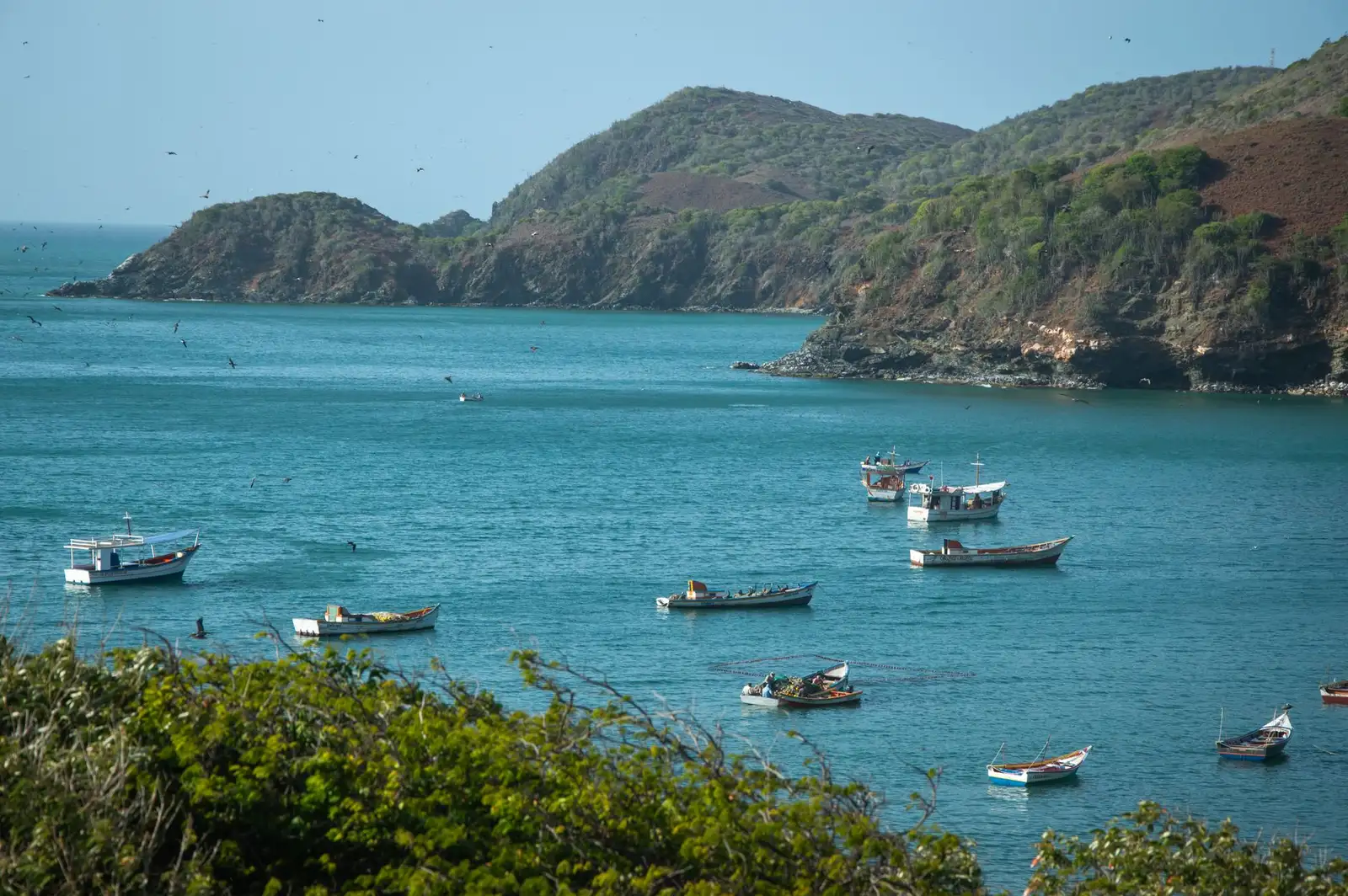

The first light at Mihajla Bay comes up slow, the water turning from black to pewter to something closer to green glass. There's no other boat in sight, no beach bar cranking music, no tender queue. Lastovo has a population of around 400 people spread across the whole island, and most mornings you'd swear half of them are still asleep. This is the kind of anchorage that makes you understand, almost immediately, why small ships exist in the first place: not to get you somewhere faster, but to get you somewhere smaller ships simply can't.
Most first-time visitors to Croatia build their itinerary around Dubrovnik, Split, and Hvar Town, and fairly so. They're extraordinary places. But they're also the places everyone else is visiting at the exact same hour you are. A gulet or small motor yacht changes the math entirely. Draft shallow enough to slip into coves that read as empty white space on a cruise ship's chart, a small vessel can tie up at a stone quay built for fishing boats, not ferries, and leave again before the day-trippers from the mainland even arrive.
What follows isn't a list of undiscovered paradise. Every place below has a name, a history, and people who live there year-round, thank you very much. It's a guide to the islands and coastal towns that Croatia's small-ship operators reach precisely because big ships can't, and because most travelers never think to ask.
Vis: The Island That Closed Its Doors for 45 Years
Vis sits further out in the Adriatic than Hvar or Korčula, which is exactly why it stayed quiet for so long: the Yugoslav military used it as a naval base and closed the island to foreign visitors from the end of World War II until 1989. No hotels got built. No marinas went up. By the time the rest of Dalmatia was wiring itself for mass tourism, Vis was still catching up on four decades of isolation.
That history is still visible. Bunkers and gun emplacements sit half-hidden in the scrub above Komiža, the island's fishing town on the western coast, where the harbor smells like diesel and grilled sardines in roughly equal measure. Komiža's fishing tradition goes back centuries; the town's fishermen were sailing as far as the Adriatic's edge before refrigeration existed, which is part of why the local specialty, viška pogača (a dense, savory pie of onions, anchovies, and tomato), tastes nothing like the tourist-menu version you'll find elsewhere on the coast.
A small ship can anchor off Stiniva, a pebble cove wedged so tightly between two cliff walls that it barely registers as a beach from the water until you're right on top of it. National Geographic has named it among Europe's best beaches, and once you've swum into that narrow gap and looked back at the opening, you understand why. From Vis, it's a short run by smaller tender to Biševo and the Blue Cave, where sunlight refracting through an underwater opening turns the water electric silver-blue for about twenty minutes around midday. Time your arrival for the early morning run before the day-boats from Hvar and Split show up, and you'll likely have it closer to yourself.
Vis was also a Greek colony in antiquity, founded as Issa in the 4th century BC. Britannica's entry on the island covers that ancient layer in more depth than most guidebooks bother with, if you want the longer version.
Lastovo: Europe's Dark Sky, and a Village Where Time Just Stopped
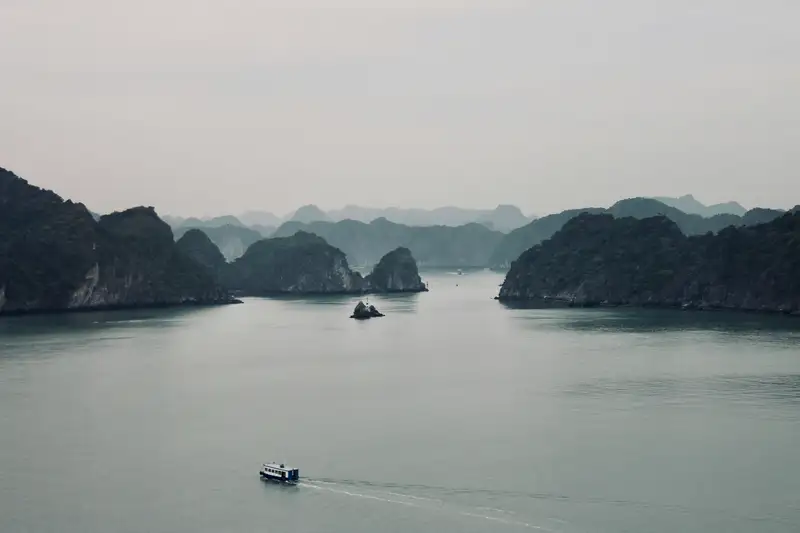
Lastovo is further from the mainland than Vis, which has kept its tourism numbers low even by Croatian island standards. The island and its surrounding waters were declared a nature park, and the island carries one of the lowest levels of light pollution anywhere in Europe (second only, by most measures, to a handful of similarly remote spots). On a clear night with no moon, you don't just see more stars. You see the Milky Way as an actual structure, not a smear.
A full day at anchor in Mihajla Bay gives you time for both the obvious pleasures (swimming in water clear enough to count pebbles ten feet down) and the stranger ones. Hike up into the island's interior and you'll find Humac, a shepherd village abandoned decades ago when the last families moved down to the coast for easier lives. The stone houses are still standing, roofless now, walls softened by moss, and there's something unsettling and lovely about walking through a place where domestic life just... stopped. No plaque explains it. No gift shop sells postcards of it. You're simply there, and then you're not.
Lastovo's isolation means supply boats, not ferries full of day-trippers, keep the island running, and that rhythm is part of the appeal. The island's official tourism information through the Croatian National Tourist Board is thin compared to what you'll find on Hvar or Korčula, which tells you most of what you need to know about how few visitors actually make the crossing.
Šolta: Split's Backyard Island That Split Forgot
Šolta is close enough to Split that locals go there for a Sunday swim, yet somehow it rarely makes it onto a first-time visitor's radar. That's the island's whole charm, honestly. It isn't hiding. It's just not shouting.
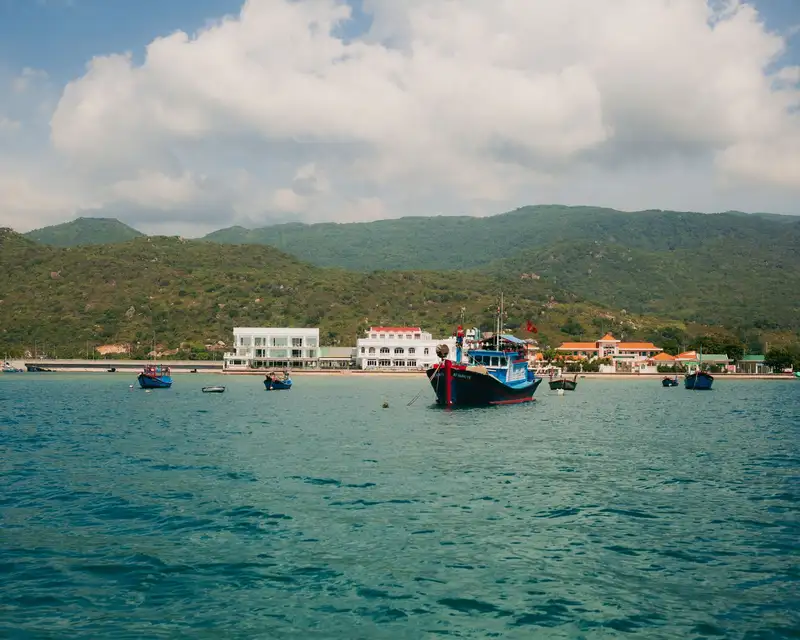
Maslinica, on the island's western tip, has a small harbor framed by a 17th-century fortress (now a hotel, though a low-key one) and a scatter of tiny islets just offshore that you can swim between in an afternoon. The island's name comes from the Latin for honey, and Šolta's honey production, along with its olive oil, remains a point of real local pride. If your small-ship itinerary includes a stop here, ask whether there's a chance to taste either; most gulet crews know a producer or two, and the olive oil in particular tends to be sharper and more peppery than the versions from Brač or Korčula, a function of soil more than anything else.
Šolta rewards an unhurried visit rather than a checklist one. There's no single monument you need to see. The point is closer to what the island's agricultural plains on nearby Hvar represent on a larger, UNESCO-recognized scale: Mediterranean land shaped by human hands over thousands of years, still working, still fed by the same winds and thin limestone soil. The UNESCO-listed Stari Grad Plain on Hvar is the famous version of that story. Šolta's fields are the quieter cousin, unlisted and ungated, where you can walk the stone-walled terraces without another tourist in sight.
Pelješac: Oysters, Walls, and Croatia's Best-Kept Wine Secret
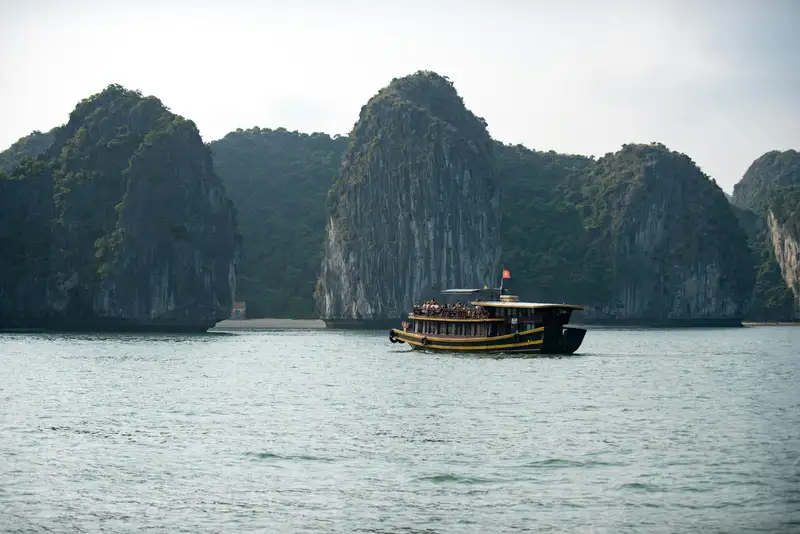
Pelješac is a peninsula, not an island, but it functions like one for small-ship purposes: long, narrow, mountainous down its spine, and accessible by sea in a way the road traffic to Dubrovnik rarely allows for comfortably in high season.
At its base sits Ston, a town most visitors to Croatia have never heard of despite the fact that its walls, built by the Republic of Ragusa (Dubrovnik's old name for itself) to protect its salt production, once stretched over five kilometers, among the longest fortification systems in Europe. The salt pans are still worked today, using methods that haven't changed much since medieval times. A short walk or paddle from Ston gets you to Mali Ston, where the bay produces oysters considered among the best in the Adriatic, harvested from waters that have supported shellfish farming since Roman times (locals will tell you Roman emperors had the oysters shipped to them, and honestly, who's going to argue).
Further up the peninsula's southern slopes, the Dingač vineyards grow on terraces so steep that until a tunnel was cut through the hillside, farmers had to carry the grapes out by boat. Dingač produces one of Croatia's most respected red wines, made from the Plavac Mali grape, and a small-ship stop here (whether at a vineyard visit arranged by the crew or simply a glass poured at a konoba in Trstenik) tends to be one of those unplanned highlights nobody mentions in the brochure. The Dalmatia Tourism Board's regional information has more on the peninsula's wine routes if you want to plan a stop around a particular producer.
Zlarin: The Island Without Cars, Near a Town Everyone Skips
Most small-ship itineraries pass near Šibenik without stopping, favoring Split or Zadar instead. That's a shame, because just offshore sits Zlarin, a car-free island that's been working coral for generations. Red coral harvesting off Zlarin dates back centuries, and the island's small museum on the craft is a genuinely interesting ten minutes, not a tourist-trap detour.
Zlarin is tiny (you can walk its main settlement in fifteen minutes) and quiet in a way that feels almost deliberate. There's a pine forest behind the harbor that locals use for shade in August, and the absence of cars means the loudest sound most afternoons is cicadas, which, depending on your tolerance for insect noise, is either peaceful or maddening. I'd call it peaceful.
A stop here works best paired with a short run into Šibenik itself to see the Cathedral of St. James, a UNESCO World Heritage site built almost entirely from stone, without brick or wood reinforcement in its vaulting, an engineering feat that took over a century to complete. UNESCO's listing for the cathedral covers the technical side of that achievement in more detail than most itineraries have time for, but it's worth a glance before you go, if only to know what you're looking at when you walk in.
Mljet's Quieter Side: Saplunara, Not Just the Lakes
Mljet gets attention almost entirely for its two saltwater lakes, Malo and Veliko Jezero, inside the national park on the island's northwestern end. Fair enough, they're beautiful, and the monastery on the smaller lake's islet has real atmosphere. But most small ships that stop at Mljet do exactly that one thing and leave, which means the island's southeastern tip, around the village of Saplunara, sees a fraction of the traffic.
Saplunara has sand, which is unusual enough on this coast to be worth mentioning on its own (Croatia's beaches run overwhelmingly to pebble and rock). Two small bays, backed by pine and low dunes, sit close enough together that you can swim one in the morning and the other after lunch without much effort. There's a handful of small family-run places serving fish and local wine, nothing fancy, and that's rather the point. The contrast with the lakes end of the island, only a thirty-minute drive away but a world apart in feel, says something about how much ground a single island can cover when nobody's rushing you through it.
The Mljet National Park official site covers the lakes thoroughly; the southeastern beaches, characteristically, get barely a mention.
Why Small Ships Reach These Places and Big Ones Don't
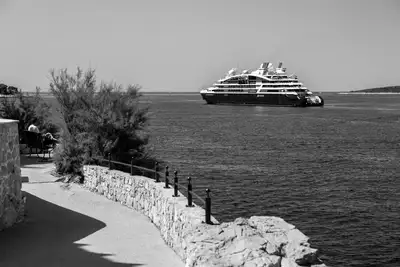
None of this works on a ship carrying three thousand passengers. The math is simple, if you think about it for a second: Stiniva's beach can't absorb a tender run of forty people at once, Mljet's Saplunara bays don't have the infrastructure, and Lastovo's single working harbor at Ubli would strain under a fraction of a megaship's daily passenger load. Small ships, whether a traditional gulet carrying a dozen guests or a slightly larger motor yacht with two dozen, draw shallow and move slow enough to anchor where the big fleets physically cannot.
There's also a difference in how a place receives you. Being processed through a port (shuttled off a tender, herded past the same six souvenir shops everyone else is herded past, shuttled back on a schedule) is a different experience than anchoring quietly in a bay nobody else is visiting that afternoon. One is logistics. The other is closer to what travel is supposed to feel like.
This is the approach operators like Culture Discovery Vacations have built their Croatia itineraries around for years, spending a full day in a single remote bay rather than rushing between five ports in a week, and arranging time with local families, fishermen, and winemakers rather than scheduled "cultural stops." It's a slower model, and it asks something of the traveler too: patience, mostly, and a willingness to let a day on a quiet island be enough on its own, without a checklist to tick.
The smaller the ship, the more of the coast actually opens up to you. That's not a marketing line. It's a function of draft, tender size, and how many people a small stone quay can reasonably hold at once. Vis stayed closed to the world for 45 years and only opened in 1989. Lastovo has fewer residents than most apartment buildings in Zagreb. Zlarin has no cars. These places were never hidden exactly. They were just never built to handle a cruise ship's worth of visitors, and the islands that make that choice, whether by geography or by circumstance, tend to be the ones worth the extra hour of sailing to reach.
For more on this, see Croatia luxury cruise.
For a broader sense of how these islands compare, Lonely Planet's rundown of Croatia's best islands is a reasonable starting point, though you'll notice most of the names above barely register on it. That's not an oversight on their part. It's just the nature of islands that keep their own schedule.
Comments (0)
No comments yet. Be the first!