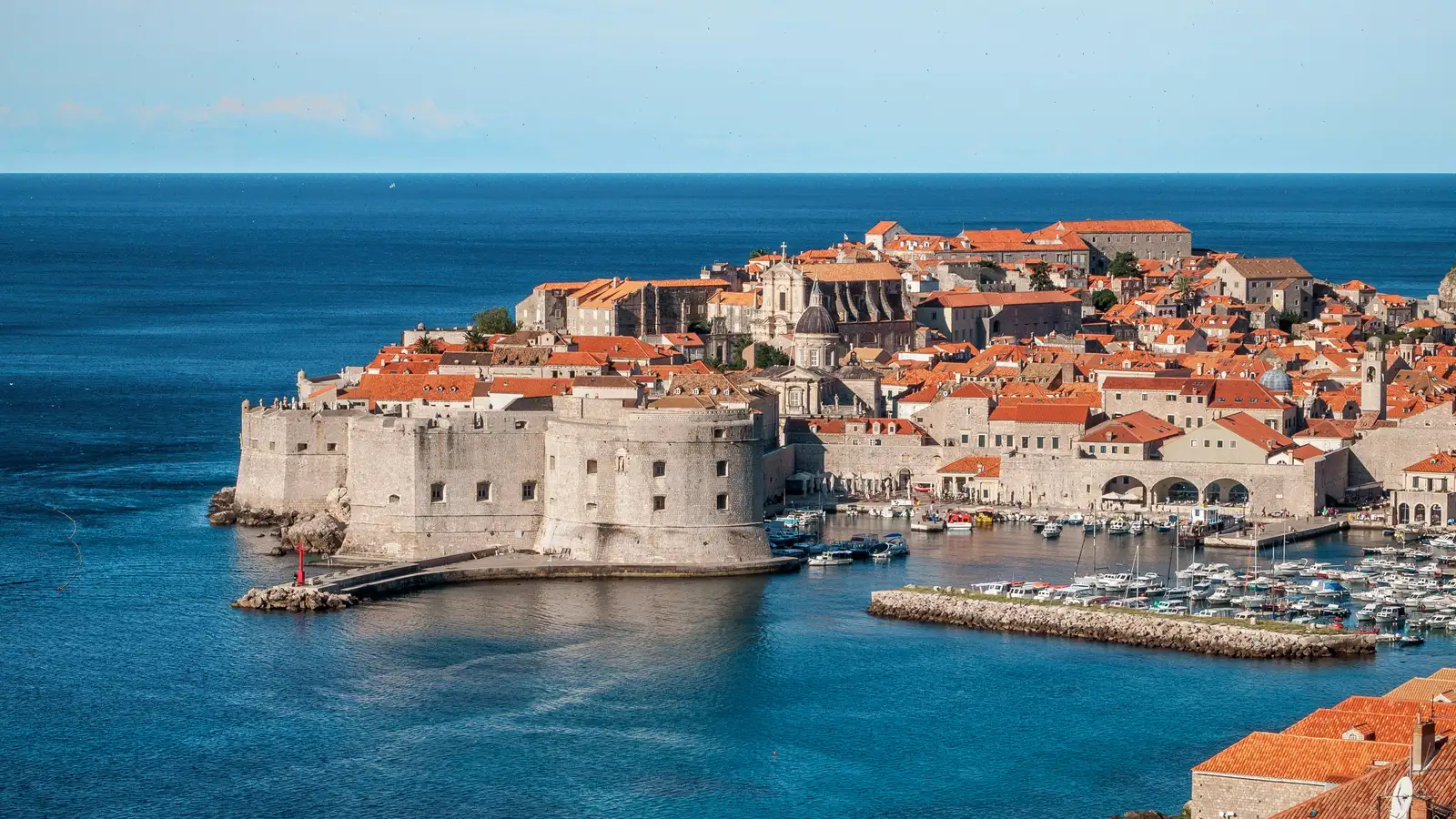

I remember standing on the quay at Mali Ston at seven in the morning, watching a man in rubber boots haul a crate of oysters out of water so clear you could see the bottom eight feet down. He shucked one, handed it to me without a word, and went back to work. That oyster had been in the sea two hours earlier. It tasted like the sea, obviously, but also like something specific: the particular mineral chill of that channel, farmed the same way since Roman times. I've eaten oysters in a lot of places since. None of them tasted like that one.
That's the standard a culinary itinerary along the Croatian coast should be held to. Not a cooking class bolted onto a standard route, but a trip built around the actual places where the food and wine come from. The two things aren't the same, and the difference matters more than most itinerary descriptions let on.
What Separates a Real Culinary Itinerary From a Marketing Label
A lot of operators now use the word "culinary" the way they use "boutique": loosely, and mostly to justify a higher price. A single cooking demonstration on deck, followed by seven nights of the same grilled fish and mixed salad, isn't a food itinerary. It's a standard cruise with a lecture.
The genuine version has a few things in common. It stops at producers, not just towns. It leaves room in the schedule for slow lunches, because a two-hour lunch with a winemaker can't be rushed without losing the point of going. And it follows the coast's actual food geography rather than a generic "best of Dalmatia" checklist that happens to include a winery because someone on the itinerary-planning team looked one up.
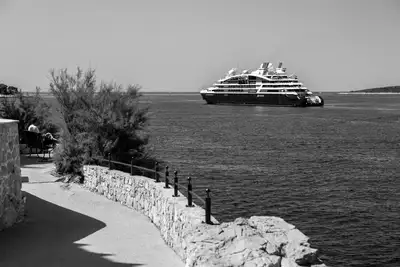
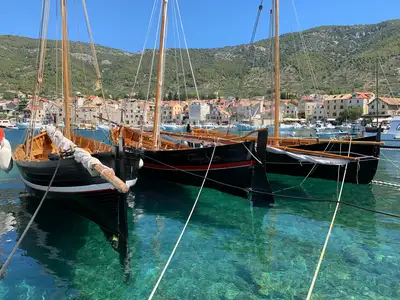
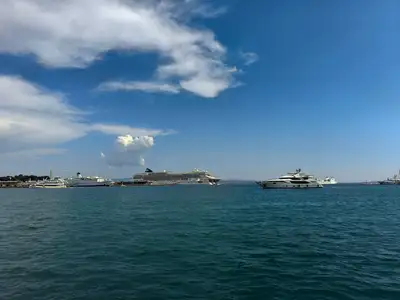
The Dalmatian coast has real food geography, the way Burgundy or the Douro does, and small ships are the only vessels built to work with it. A ship carrying 300 passengers can't dock at Mali Ston. It can't anchor off Vis for an afternoon so eight people can walk into Komiža and eat at a konoba with four tables. Scale is the whole obstacle here, and it's why this kind of trip only really works on something small: a gulet or motor yacht carrying 16 to 30 people, drawing shallow enough to get into harbors the larger ships simply pass by.
Split: Where the Trip Should Begin, and the Market That Sets the Tone
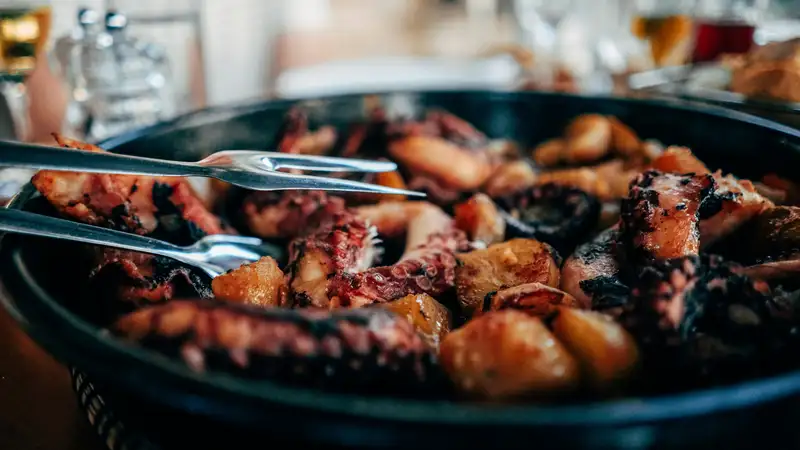
Most culinary-focused routes start or end in Split, and there's a good reason for that beyond logistics. The green market, Pazar, sits just outside Diocletian's Palace, and it's worth arriving a day early just to walk through it before the ship departs. Sardines by the crate, chard from the surrounding hills, sheep's cheese wrapped in wax paper from farms on Pag brought over specifically for this market. If your itinerary includes a cooking class, this is where the ingredients should come from, not a supplier's warehouse.
Diocletian's Palace itself, a UNESCO World Heritage site since 1979, is worth the hour or two most itineraries allot it, though food isn't really the draw there. The draw is what surrounds it: the informal bars and konobas tucked into the old walls, serving fish that came off boats that morning.
Brač: Olive Oil and the Interior Nobody Photographs
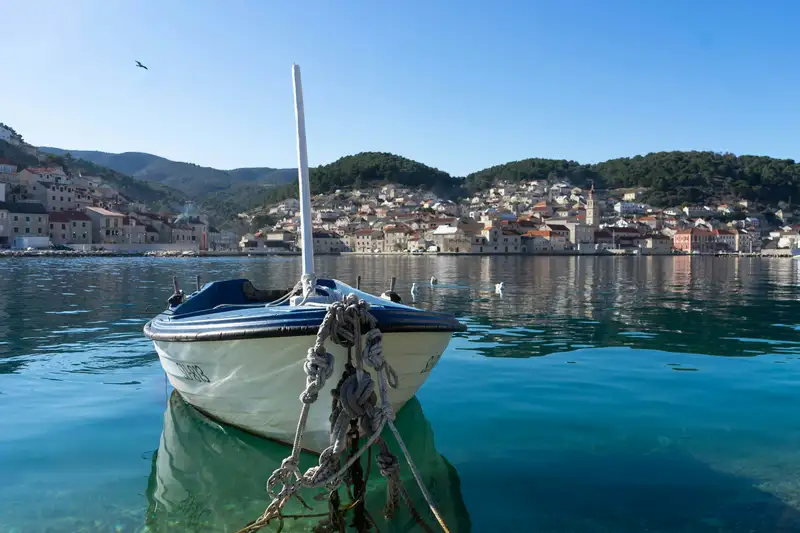
Brač gets treated as a swimming stop by most standard itineraries, thanks to Zlatni Rat beach, and fair enough, it's a genuinely good beach. But a culinary itinerary should pull inland, toward the olive groves around Škrip and Selca, where family producers press oil in small batches and will pour it for you straight off the press if you show up at the right time of year (October into November is harvest season, and if your trip lands then, ask the crew to arrange it).
Brač lamb, raised on the island's rocky, herb-covered pasture, has a reputation among Dalmatians that most visitors never hear about because it rarely makes it onto restaurant menus written for tourists. If your ship's crew has a relationship with a family that runs sheep on the island, and the good small-ship operators generally do, this is worth pursuing over the standard beach day.
Hvar: Lavender, Wine, and the Interior That Most Cruises Skip
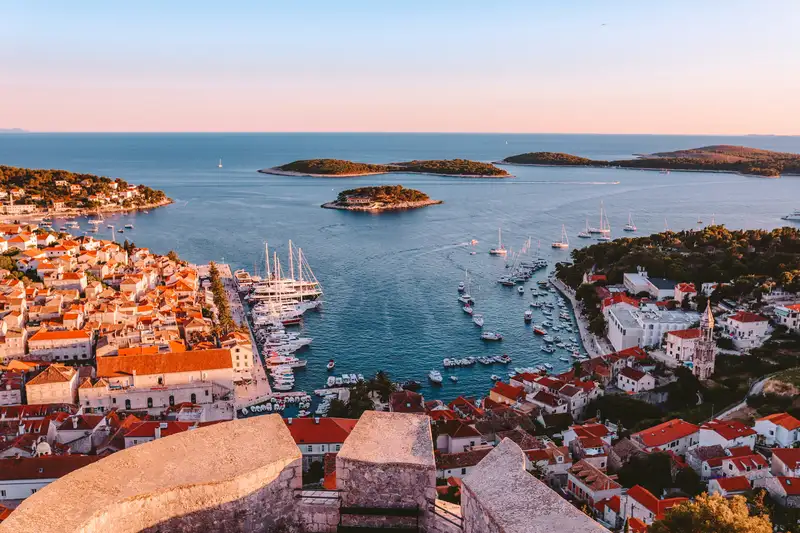
Hvar Town gets crowded in July and August, and most large-ship visitors never see anything beyond the harbor and the main square. A culinary-focused small ship should be doing the opposite: using Hvar Town as a base for getting inland.
Velo Grablje, up in the hills above Stari Grad, is where the island's lavender industry actually lives. The Bučić family has run a small distillery there for generations, and the lavender honey they sell locally bears no relation to the tourist-shop version sold by the harbor in Hvar Town or Split. Getting to Velo Grablje without a car is genuinely difficult, which is precisely the kind of friction a well-run small-ship itinerary should absorb on your behalf, arranging a van or a guided walk rather than leaving you to work it out.
The wine side of Hvar deserves its own stop. Bogdanuša, a white grape grown almost nowhere else, comes from vineyards on the Stari Grad Plain, itself a UNESCO World Heritage site for its Greek-era land division system, still farmed today more or less on the same grid laid out over 2,400 years ago. Tasting a glass of Bogdanuša while looking out over that plain is one of the few moments on a Croatian coastal trip where the history and the food genuinely sit on the same table.
Vis: The Island That Wine Snobs Talk About Quietly
Vis was closed to foreign visitors as a military zone until 1989, which sounds like ancient history but really isn't. That isolation left the island's wine culture almost untouched by the commercial pressures that reshaped vineyards elsewhere on the coast. Vugava, the local white grape, is barely grown outside Vis and almost never exported in meaningful volume, so tasting it here is close to the only way to taste it at all.
Komiža, on the western side of the island, still runs on fishing in a way that Hvar Town or Korčula largely don't anymore. If your itinerary times a stop here around the morning catch coming in, you're looking at the closest thing on this coast to eating fish the way islanders actually eat it: simple, grilled, seasoned with almost nothing, because the fish doesn't need help.
Pelješac: Where the Serious Wine Drinking Happens
If the itinerary only has room for one dedicated wine stop, it should be Pelješac. This is the peninsula that produces Dingač and Postup, the two protected designations for Plavac Mali grown on brutally steep, south-facing slopes running down toward the sea. The vines get reflected light off the water on top of direct sun, which is part of why the wine from these two small zones carries more weight and structure than Plavac Mali grown almost anywhere else on the coast.
Two producers worth naming specifically: the Miloš winery in Ponikve, which receives visitors with relative ease, and Grgić Vina in Trstenik, founded by Croatian-American winemaker Mike Grgich (of Napa fame, if the name rings a bell), which requires advance arrangement and is worth the extra planning. A small-ship operator with those relationships already in place, rather than one improvising a winery stop from a printed list, is offering something you genuinely can't easily arrange on your own.
Mali Ston: The Oysters, Again, Because They're the Point
I mentioned the oyster beds at the start of this piece, and I'm coming back to them because no culinary itinerary along this coast is complete without a stop here. Ostrea edulis, the flat European oyster, has been farmed in the channel between Mali Ston and Malostonski Bay since Roman times, and the water conditions there (a mix of fresh and salt water, low pollution, strong current) are close to ideal for it. The Institute of Oceanography and Fisheries in Split has studied the bay's shellfish farming for exactly this reason: the conditions are unusual enough to be worth documenting.
Eating oysters here isn't a novelty stop. It's closer to the whole reason to plan a food-focused trip to this coast in the first place. A dozen oysters at a plastic table outside a family-run konoba, with the boats visible from where you're sitting, does something a fine-dining oyster bar in a big city simply can't replicate, no matter how good the ice.
Korčula: Grk Wine and a Different Kind of Old Town
Korčula's old town gets compared to a miniature Dubrovnik, which undersells it. From a food standpoint, the island's real distinction is Grk, a white wine grape grown almost exclusively on sandy soil near the town of Lumbarda at the island's eastern tip. Grk vines are all female, which means they can't self-pollinate, an odd genetic quirk that keeps the wine relatively rare even by Dalmatian standards. Most itineraries that stop in Korčula town skip Lumbarda entirely, which is a mistake if wine is any part of the reason you booked the trip.
Peka: The One Dish Worth Building a Whole Evening Around
At some point on a properly built culinary itinerary, someone is going to cook you peka, and it's worth understanding what you're actually eating. Peka is meat (usually lamb or octopus) and vegetables, cooked slowly under an iron bell buried in hot coals, for hours rather than minutes. It requires advance ordering, generally a day ahead, because the cooking time doesn't allow for spontaneity. This is the meal that anchors the evening it's served, and any operator worth booking will have a family or a konoba they return to specifically for this, rather than treating it as a one-off demonstration for the cameras.
What a Day Actually Looks Like
Mornings on a food-focused itinerary tend to start earlier than on a standard sightseeing trip, mostly because markets and fish landings happen early and don't wait for anyone. A typical day might run: early arrival at a small harbor, a walk through whatever market or landing is happening that morning, a mid-morning stop at a producer (winery, olive press, distillery), a long lunch built around that morning's visit, an afternoon swim stop to counterbalance all the eating, and dinner either on board or at a konoba the crew has an actual relationship with.
Group sizes for this kind of itinerary tend to run smaller than the general small-ship average, often 16 to 28 guests rather than the 30 to 40 you'll find on the more standard sightseeing routes. There's a practical reason for it: a family winery can pour tastings for 16 people around a table. It can't easily do that for 40, and the ones that try tend to turn the visit into something closer to a bus-tour stop, which defeats the purpose.
Timing It Around the Calendar, Not Just the Weather
Most general guides to this coast tell you June and September are the ideal months, and for swimming and crowd avoidance that's true enough. For a food-focused trip specifically, the calendar matters in additional ways. Grape harvest on Pelješac and Korčula generally runs through September into early October, and some producers will let visitors help with picking if the timing lines up, though this needs arranging well in advance and isn't something you can count on. Olive harvest on Brač and Hvar runs later, October into November, past the point when most small-ship itineraries are still sailing, which is one of the few genuine tradeoffs of trying to catch that specific experience.
If wine and olive oil matter more to you than warm swimming water, a shoulder-season trip in late September or early October is worth serious consideration, even though it means packing a light jacket for the evenings.
Booking Around a Culinary Focus
Not every small-ship operator markets a specifically culinary itinerary, and the ones that do vary widely in how seriously they take the label. Ask direct questions before booking: which specific producers does the itinerary visit, and are those relationships long-standing or arranged fresh each season? Does the crew cook, or does the itinerary simply stop somewhere for a restaurant meal and call it a highlight? How many nights include a scheduled food or wine activity versus how many are left generic?
This is the kind of trip where a specialist operator's actual relationships on the ground matter more than the glossy description in the brochure. Operators like Culture Discovery Vacations, which builds its Dalmatian coast itineraries around specific families (a winemaker on Pelješac, an olive farmer on the mainland near Omiš, a boat skipper hosting a backyard barbecue on Brač) rather than generic stops, are working from a different model than the standard cruise-and-see version of this coast. The difference shows up less in the marketing copy than in what actually happens on day four, when you're sitting at someone's kitchen table instead of a restaurant that's fed forty tour groups that same week.
For a general framework on how to think about pacing a trip like this against the rest of your travel, particularly if Croatia is one leg of a longer route through the Mediterranean, it's worth looking at how Andalusia itinerary pacing gets handled elsewhere. The underlying decision, how much to schedule versus how much room to leave for a lunch that runs long, comes up on this coast just as often.
For background on the region generally, Lonely Planet's guide to Dalmatia is a solid starting point for understanding how the islands and coastal towns relate to each other, and the official Croatian National Tourist Board site has current, reliable information on park fees, ferry schedules, and seasonal opening dates that change often enough to be worth checking close to departure.
The Actual Point of All This
You could visit every one of these places on a rented sailboat, working out the wineries and the oyster farmers yourself. Some people do, and I don't doubt they have a good time. But the relationships that turn a wine tasting into a two-hour lunch with the actual family, or a peka dinner into something more than a demonstration for tourists, take years to build. A small ship with the right crew has usually already done that work.
For more on this, see Croatia luxury cruise.
Is that worth paying for? For most people planning a week around food and wine specifically, rather than sightseeing with meals attached, I think it is. Not close.
Comments (0)
No comments yet. Be the first!